How to Decide What NOT to Do in Your Business
11 min read · Decision Making & Focus · April 2026
Every business owner knows how to build a to-do list. Fill it with goals, tasks, ideas, follow-ups, meetings, and projects — and somehow it only gets longer. But very few entrepreneurs ever build the more important list: the stop-doing list.
Knowing what not to do in your business is one of the most underrated strategic skills in entrepreneurship. The businesses that scale aren't the ones that do the most — they're the ones that ruthlessly protect their focus, cut what doesn't serve them, and channel their best energy into the work that actually drives growth.
This blog breaks down exactly how to make those decisions — clearly, confidently, and without second-guessing yourself.
Why "Doing More" Is Quietly Killing Your Business
There's a cultural myth in business that equates busyness with productivity. Long hours, packed calendars, and overflowing inboxes are worn as badges of honour. But this mindset comes at a serious cost.
When you try to do everything, you end up doing nothing particularly well. Your attention fragments. Your team gets pulled in too many directions. Decisions slow down. The things that actually matter — strategy, relationships, product quality — get squeezed into whatever time is left over.
Jim Collins, author of Good to Great, put it plainly: the best leaders he studied maintained a rigorous "stop doing" list alongside their to-do list. The discipline to eliminate was just as important as the discipline to execute.
The Four Questions That Reveal What to Cut
Before building your stop-doing list, you need a framework for evaluating what deserves to stay. These four questions will sharpen your thinking and help you decide what not to do in your business with clarity and confidence.
Common Things Businesses Should Stop Doing
Once you understand the framework, the next step is applying it. Here are the most common areas where business owners consistently do things they shouldn't — and the signal strength that suggests it's time to cut.
How to Build Your Business Stop-Doing List
A stop-doing list is not just a thought exercise — it's a live business document. Here is a step-by-step process for deciding what not to do in your business and actually acting on it.
Applying This to Real Business Decisions
Knowing what not to do in your business becomes most powerful when applied to specific, recurring decisions. Here is how this thinking plays out across the most common business functions.
Services and Products
Every service or product line you offer consumes resources — time, attention, support, and inventory. If a product isn't generating meaningful revenue or strategically supporting your core offer, it is costing you more than you realise. Cut the tail. Specialise. Do fewer things at a level your competitors can't match.
Clients and Relationships
Not all clients deserve your best work, because not all clients are willing to pay for it. Part of strategic focus is knowing which relationships to stop investing in. Clients who are difficult, low-margin, or constantly out of scope drain your team's morale and your business's bandwidth.
Marketing Channels
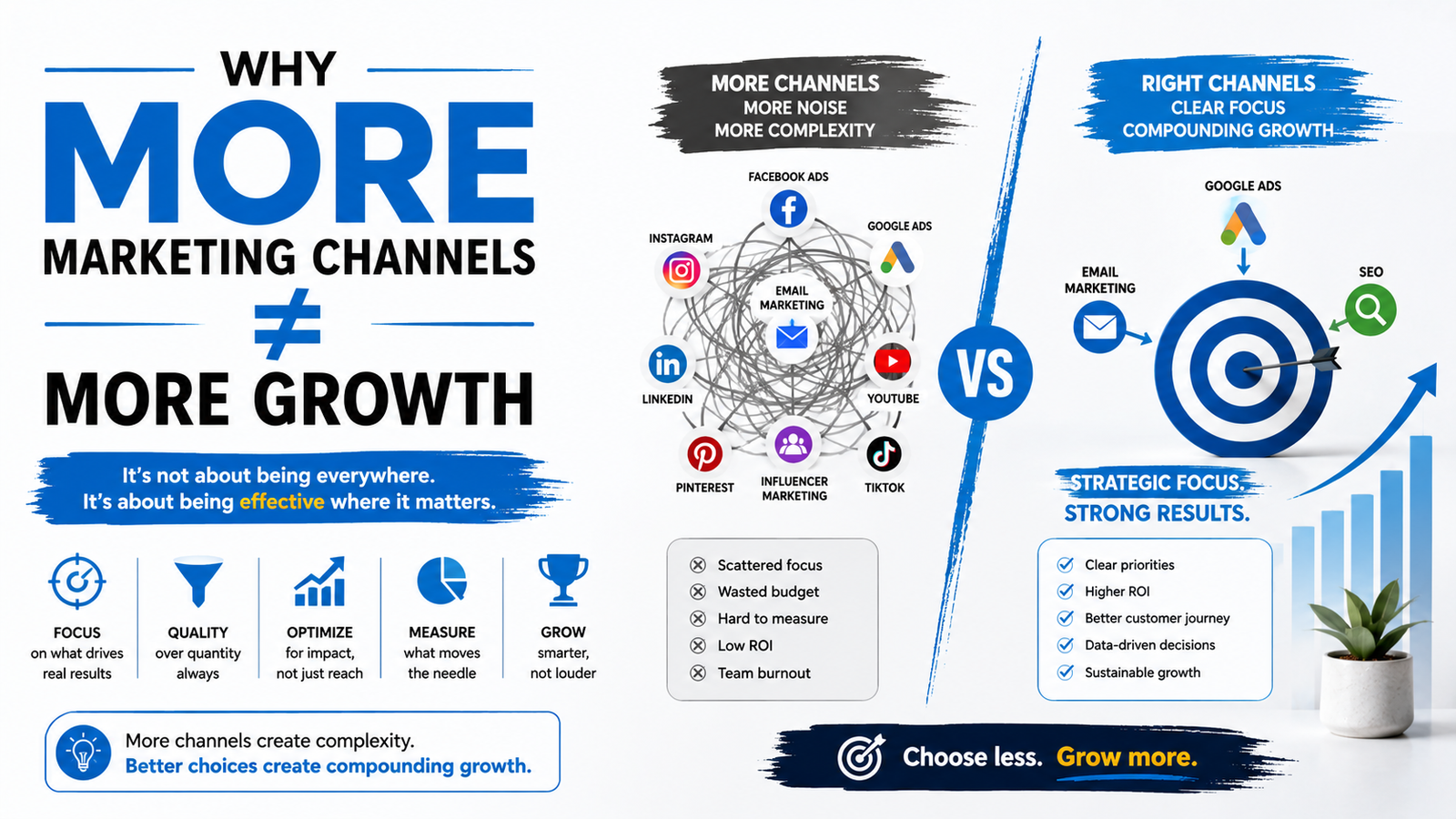
Most businesses spread themselves across six marketing channels and get mediocre results on all of them. The sharper decision is picking one or two channels where your ideal customers actually are — and going deep rather than wide.
Internal Processes
Many internal processes exist because they made sense three years ago. Ask your team which reports, meetings, and workflows they find least useful. The answers are usually revealing — and often freeing.
| Activity | Current Status | Value Created | Decision |
|---|---|---|---|
| Weekly all-hands meeting (2 hrs) | Every Monday | Low | Stop |
| Manual invoice generation | Monthly | None | Automate |
| Maintaining 5 social platforms | Daily | Low–Medium | Cut to 2 |
| Client reporting (3 low-value clients) | Weekly | Very low | Stop or exit |
| Core product development | Ad hoc | Very High | Protect & prioritise |
| Key client relationship calls | Monthly | High | Keep |
The Fear of Stopping — and How to Overcome It
The biggest obstacle to knowing what not to do in your business isn't logic — it's emotion. Business owners fear that stopping something signals failure, disappoints someone, or causes them to miss out.
"The art of leadership is saying no, not yes. It is very easy to say yes." — Tony Blair
These fears are understandable, but they are rarely accurate. In practice, the things you're afraid to stop are usually things no one will miss — and the space you create by stopping them will be far more valuable than the activity itself.
Reframe stopping as a strategic choice:
- You are not abandoning a client — you are freeing up time to serve better ones at a higher level
- You are not killing an idea — you are protecting your best ideas from being diluted by weaker ones
- You are not admitting failure — you are making a deliberate decision about where excellence is possible
- You are not losing options — you are gaining focus, and focus is how businesses win
What to Do With the Time and Energy You Free Up
Making a deliberate stop-doing list is only half the work. The other half is intentionally reinvesting that reclaimed time and energy into the activities that create the most value.
Your Stop-Doing List Starts Today
Most business owners plan to get more focused — someday. After this project, after this quarter, after things settle down. But things never settle down unless you decide they will.
Understanding what not to do in your business is a decision you make today, not a reward you earn after clearing your plate. The plate only clears because you decide what belongs on it.
Start with just three things:
- One task you will stop doing entirely this week
- One recurring meeting or process you will cut or shorten
- One client, channel, or product you will begin to phase out this quarter
Three decisions. That is all it takes to begin. The momentum builds from there.
The bottom lineThe most successful businesses aren't the busiest ones — they're the most focused. Knowing what not to do in your business is not a sign of limitation. It is a sign of clarity. Every low-value task you eliminate, every wrong client you release, and every unnecessary meeting you skip creates space for the work that actually matters. Build your stop-doing list today. Your best work is waiting on the other side of it.
Frequently Asked Questions (FAQS)
To decide what NOT to do in your business, start by auditing your daily activities and identifying tasks that don’t contribute to revenue, growth, or strategic goals. Use frameworks like value vs. effort analysis and eliminate or delegate low-impact work. This approach helps you focus on high-impact actions that truly drive results.
Common examples include micromanaging teams, chasing low-value clients, maintaining too many product lines, and spending time on tasks that can be automated. Understanding what NOT to do in your business allows you to reduce inefficiencies and improve operational focus using smarter decision-making strategies.
Eliminating low-value tasks frees up time, energy, and resources that can be reinvested into high-return activities like strategy, sales, and product development. When you clearly define what NOT to do in your business, you create space for meaningful work that drives sustainable growth and better productivity.
A stop-doing list is a strategic tool used to identify and eliminate tasks, processes, or commitments that no longer add value. It complements your to-do list by improving focus and clarity. Businesses that regularly define what NOT to do in your business make faster, sharper decisions and avoid unnecessary complexity.
Entrepreneurs often make the mistake of cutting long-term investments like branding or relationships too early, or relying only on short-term data. The goal is not just to remove tasks but to strategically decide what NOT to do in your business while protecting activities that contribute to long-term growth and competitive advantage.