What Is STP in Marketing? A Simple Guide
Most marketing fails not because the product is bad or the budget is too small — it fails because it tries to speak to everyone at once. A generic message aimed at the broadest possible audience rarely connects with anyone in a meaningful way. This is exactly the problem that the STP marketing model was designed to solve.
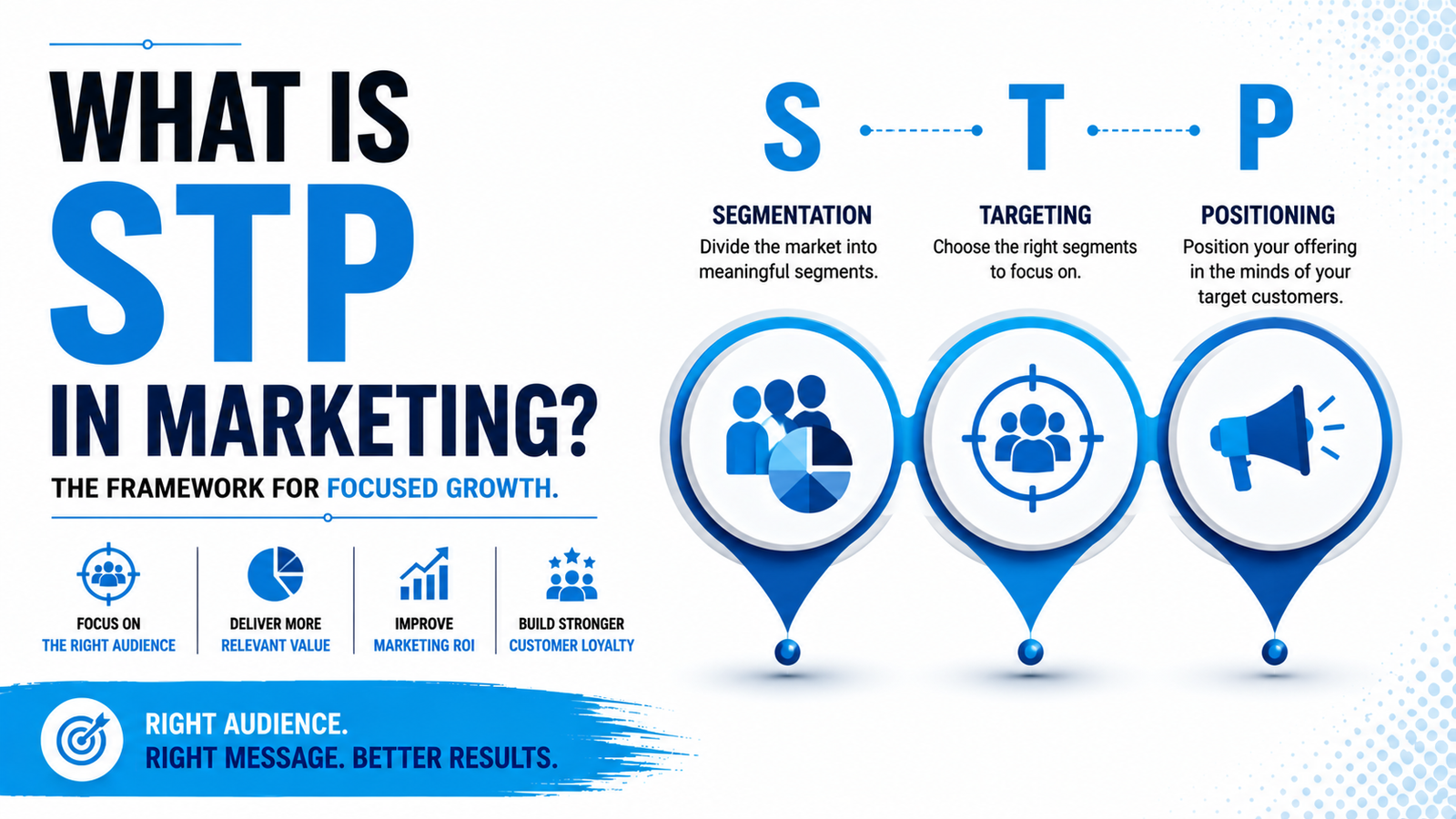
So what is STP in marketing, and why does it matter so much? The STP model is one of the most widely used strategic frameworks in modern marketing. It gives businesses a structured way to move from a broad market to a specific, focused audience — and then craft a message that speaks directly to that audience's needs, values, and expectations.
Whether you are running a startup, managing a brand, or planning a product launch, understanding the STP model helps you stop wasting effort on people who will never buy, and start investing it in people who will.
The Three Stages of the STP Model
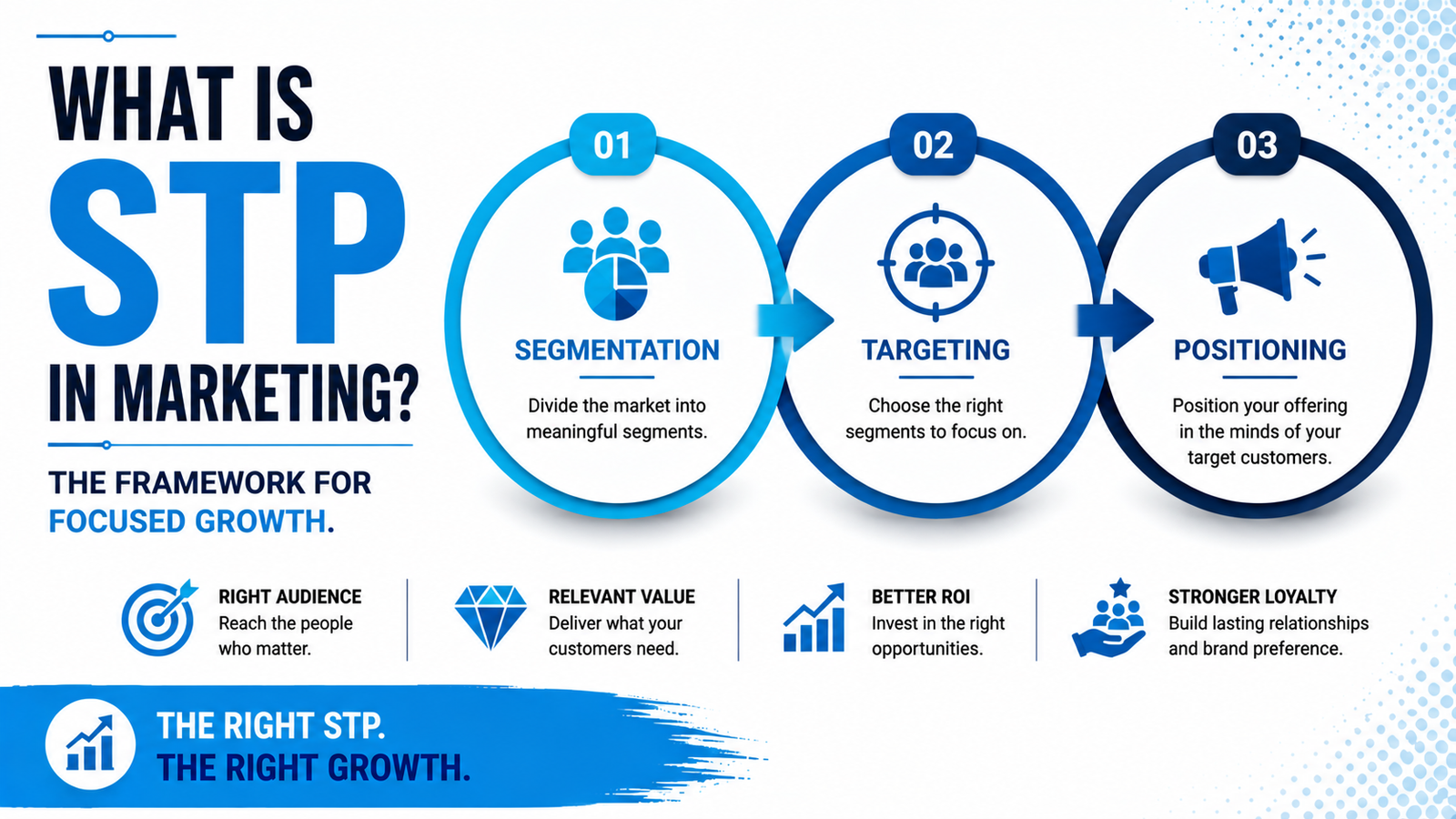
The STP marketing framework works in sequence. Each stage builds on the one before it, and skipping any one of them weakens the entire strategy.
Stage 1 — Segmentation: Dividing the Market
Segmentation is the process of splitting a broad market into smaller, more defined groups. Each segment should contain people who are similar to each other in relevant ways, and different from people in other segments. The goal is to identify clusters of potential customers who can be reached and served in a similar way.
There are four main ways to segment a market:
Good segmentation identifies groups that are measurable, large enough to be worth pursuing, accessible through your marketing channels, and different enough from each other that they warrant a different approach. A segment that looks distinct on paper but behaves identically to another is not a useful segmentation.
Stage 2 — Targeting: Choosing Your Audience
Once you have mapped the segments that exist in your market, targeting is the process of deciding which ones to focus on. Not every segment will be right for your business — some will be too small, too expensive to reach, too competitive, or simply a poor fit for what you offer.
When evaluating segments, consider three things: the size and growth potential of the segment, how well your product or service fits their specific needs, and how much competition already exists in that space. The best target segment is one where your offering is genuinely well-suited and where you have a realistic chance of standing out.
The three most common targeting strategies:
Stage 3 — Positioning: Owning a Place in Your Customer's Mind
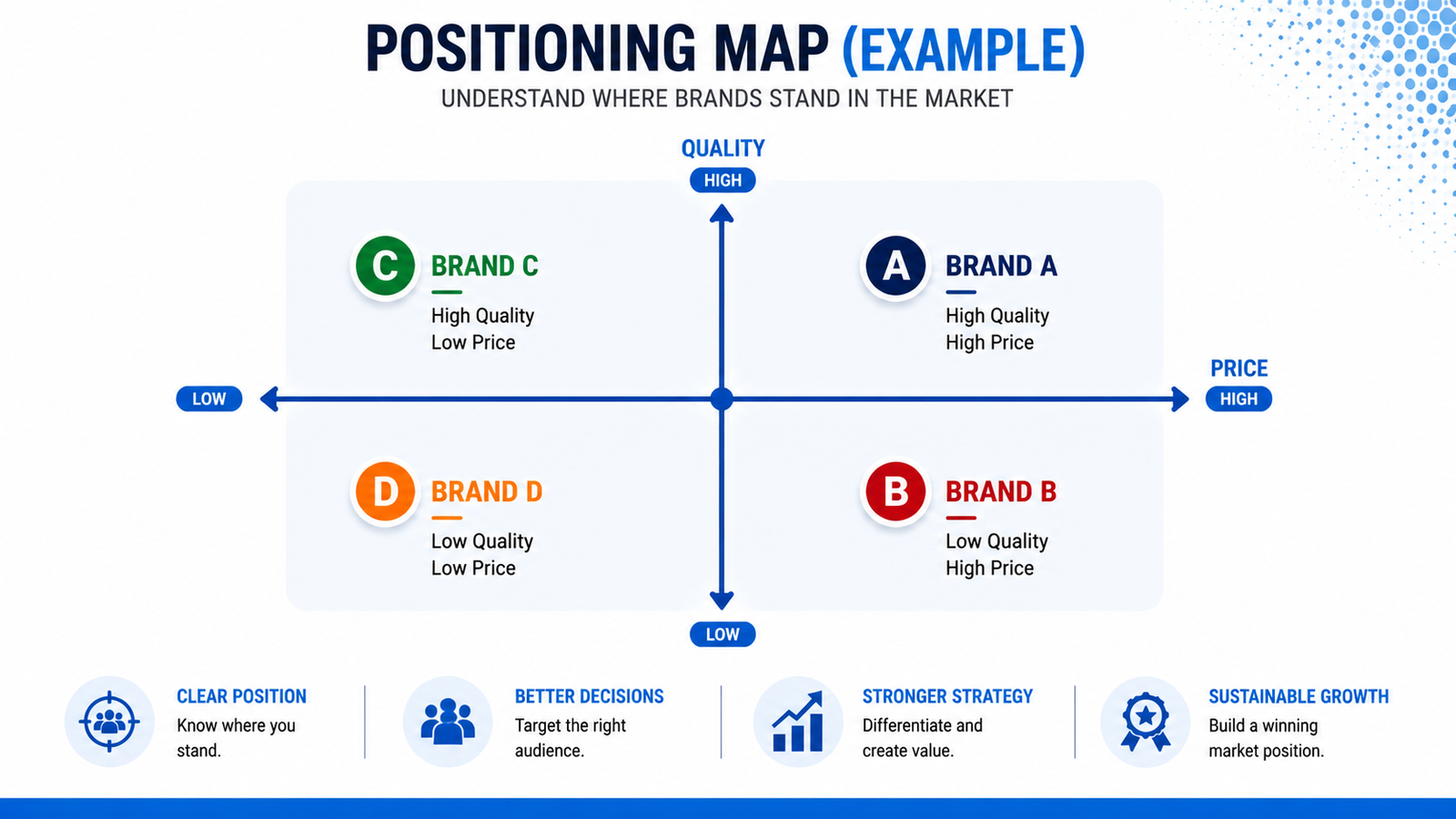
Positioning is the final and arguably the most creative stage of the STP marketing model. It answers a simple but critical question: in the mind of your target customer, what do you want your brand or product to stand for?
Positioning is not about what your product does — it is about how your customer perceives it relative to everything else available to them. This is the stage of what is STP in marketing that most directly shapes your brand's identity. A positioning statement defines who you are for, what you offer, and why you are different from the competition in a way that actually matters to your audience.
"Positioning is not what you do to a product — it is what you do to the mind of a prospect." — Al Ries & Jack Trout
Strong positioning is specific, consistent, and credible. Volvo owns safety. Apple owns simplicity and design. Zomato owns speed and convenience in food delivery. These positions were not accidents — they were the result of deliberate choices made at the strategy level and then reinforced across every customer touchpoint.
STP in Marketing — A Real-World Example
To make the framework concrete, consider how a hypothetical fitness app might apply what is STP in marketing in practice:
Without the STP framework, this app might have tried to serve everyone — and ended up with a generic experience that satisfied no one particularly well. By applying the STP marketing model, the team makes a clear choice and builds everything — product, content, tone, pricing, and channels — around one well-defined audience.
Why the STP Model Matters for Your Business
Understanding what is STP in marketing is not just useful for large companies with big brand budgets. It is arguably more valuable for small businesses, where every rupee of marketing spend needs to work harder.
- Stops you from wasting budget on audiences who will never convert
- Makes your messaging sharper because it is written for a specific person, not an average everyone
- Helps you identify underserved segments where competition is lower and opportunity is higher
- Gives your entire marketing team a shared strategic foundation to build from
- Improves conversion rates because the right message reaches the right people at the right time
The Bottom Line What is STP in marketing, at its core? It is the discipline of choosing who you are for — and then showing up for them in the most relevant way possible. Segment your market honestly, target the audience you can genuinely serve best, and position your brand around what actually matters to them. Businesses that do this consistently spend less on marketing and get better results from it. Start with one well-defined segment, own your positioning there, and expand from a position of strength.
Frequently Asked Questions
Common questions about what is STP in marketing, how the framework works, and how to apply it.
-
FAQ 01
STP stands for Segmentation, Targeting, and Positioning. It is a three-stage marketing framework that helps businesses identify distinct customer groups, select the most suitable group to focus on, and define how their product or service should be perceived by that group relative to competitors.
-
FAQ 02
Segmentation is about mapping — identifying all the different groups that exist within a market without yet committing to any of them. Targeting is about choosing — deciding which of those segments your business will focus its resources on. Segmentation is observational; targeting is strategic.
-
FAQ 03
Yes — and they often benefit from it more than large businesses do. Small businesses have limited budgets, which means every marketing decision carries more weight. The STP framework helps small business owners stop trying to reach everyone and instead invest in the one audience they can genuinely serve best. This focus produces stronger results per rupee spent than any broad, generic campaign.
-
FAQ 04
The STP model and the 4Ps (Product, Price, Place, Promotion) work at different levels of strategy. STP comes first — it defines who you are targeting and how you want to be positioned. The 4Ps come after — they define how you will execute your strategy through product design, pricing, distribution, and promotion. Think of STP as the strategic direction and the 4Ps as the tactical execution that follows from it.
-
FAQ 05
At minimum, review your STP strategy once a year or whenever something significant changes — a new competitor enters your segment, your target audience's behaviour shifts, or you launch a new product line. Positioning in particular can become stale if the market moves around you. The businesses that stay relevant are the ones that treat STP as a living strategy, not a one-time exercise.